Alice Falls

Kipling's pond pm~The end of Alice~

The pond was deeper than she expected.  Colder, too.  She felt as though she was sliding, sinking, falling down down down to the bottom — wherever that was.  A sudden flash of memory swam by — Dr. Seuss and McElligott’s Pool.  A kid with a fishing pole and a bottomless pit of water that ends up in an ocean somewhere.

Panic set in as it is wont to do when a person is drowning.  Her mind stopped making sense.  Instead, it fired a final desperate thought: This was how the story ends?  Really?

Bummer.

~Alice’s Parents~

“It’s so quiet without our girl,” her father said.

“It’s quiet because Alice was such a clumsy child, always bumping into things.  A walking, breathing cartoon of ungainly girlhood, she was.  Never had her mind on what she was doing.”

“Not true.  Not true at all”, said Alice’s father. “Alice is a lovely girl.  In another story she might have been a dancer.  We could have called her Clara.”

A slender young man strode into the library.  “Clara?  Who’s Clara?”

“Pay no attention to the old coot,” Alice’s mother replied.  “I haven’t a clue what he’s on about.  He’s a crackpot.”

“Where’s Alice?” the man asked.

“Alice doesn’t live here anymore.  She’s moved.”

Alice’s boyfriend was stunned.

“Can you blame her?” Alice’s father said to his wife.  “You were always at her about something — don’t drink this, don’t eat that, put the key back where you found it – nag, nag, nag.  No wonder she left.”

“Are you saying, it’s my fault?”

“Does a donkey bray?”

The ex-boyfriend turned on his heel and walked out without a word.

The bickering continued.  It never stopped.

~Alice makes up her mind~

Alice had never been able to settle.  No matter where she traveled, how many marvels she discovered, it was never enough, because there was always one irritation that she could not shake.  Herself.

Good, God, she was annoying.  Chasing after some elusive thing.

She knew well enough what she didn’t want: Children; factory work; city living; an overbearing husband (or an even-tempered one for that matter, nope, no husband at all, chalk it up to her parent’s lousy marriage for scaring her off that one).  The list grew longer the older she got.  Her problem was she couldn’t decide what it was she did want.

Until now.

Boxes were still stacked in the foyer of the cottage.  Her cottage.  Her new home. Before she began the task of unpacking, she’d gone to a local market and picked up items for a picnic lunch. Sandwich, chips, some fruit, and a bottle of wine.

It was the pond that sold her.  The water lilies spread like a cape over the surface, fish flicking orange tails just below the surface.  She hadn’t thought of having a pond until she saw this one.  And then, when she did, she knew it’s what she wanted all along.

She had one glass of wine.  That’s all.  Something jumped in the water, and it startled her.  She dropped her glass and it broke, cutting her knuckle.  Then she accidentally knocked over the bottle and the rest of the wine poured out onto the grass as the bottle rolled the few feet and plopped into the pond.

“Dammit.”

She figured she’d kill two birds with one stone.  Retrieve the bottle and wash the blood off her finger at the same time.  She thought about a lot of things in her last few minutes.  Like how much she was going to enjoy living here.  She might even invite her parents for a visit, if they were well enough to make the trip.  Definitely put in a garden around the pond.

She could do anything she wanted now.  After all, she had lots of years ahead of her yet, didn’t she?


~~~~~~~~~~~~~~~~~~~~~~~~~~~~~~~~~~

n.b.  The object of this DP Weekly Writing Challenge was to begin a story with the end.  It sounded like fun.  It was fun to figure out.  I hope you like it.

A clear blue sky

Oh, September . . . you are a hard month.

I hadn’t intended to do a post on 9/11 today.  Though, the fact of the day was on my mind as soon as I woke.  I acknowledged the sadness tied to the date and then checked my email.  There was one from my brother concerning festive plans for the weekend and I engaged myself in thoughts of a happier nature.

Later, while drinking coffee and glancing at the news on the internet, I thought of it again.  I looked at photos of the various commemorations, read some of the comments and anecdotes from people who were there or experienced a near miss.  Their words and the images filled the space I had meant for other things.

I am floored by the enormity of our collective grief. Almost everyone, it seems, knows someone who was directly impacted by that day.

My husband’s cousin and his wife both worked on Wall street.  She worked for Cantor Fitzgerald in the north tower of the World Trade Center, while he was in a building across the street.  The sky was clear and blue on the morning of September 11, 2001, and because it was their first wedding anniversary, they decided to take the day off.

A guy I knew growing up in tiny-town northern New York was voted Most Likely to Succeed when he graduated from high school.  He was a sweet, smart guy with unassuming charm.  Years later his son succeeded in snagging a dream job on Wall Street.  Ironically, also at Cantor Fitzgerald in the north tower.  His name was Shannon Lewis Adams, and he did not have an anniversary to prod him into skipping work that day.

I’ve been in New York City many times in the last twelve years.  But I could not bring myself to make the trip to that painful place in lower Manhattan until last November.  I was stunned by how different it looked.  The makeshift walls surrounding the site, the construction still going on.  I think that it will be beautiful one day.  On that afternoon, though, it felt desolate.  My ears ached from the cold wind that was blowing, but I found what I was looking for.  

I have nothing wise or special to offer up today.  Just a tugging in my heart and a name. The name of a boy I didn’t even know, who was probably sweet and smart and unassuming like his dad.

That is all.

shannon adams

Have you seen my mother?

If you see her, let me know.  There's no money in it for you.  Just knowing you brought me peace of mind is reward enough, right?

I love my mother, but to tell you the truth, I have difficulty keeping track of her.  It’s embarrassing.  Sometimes someone will ask, where’s your mom these days?  To which I often have to answer – I have no idea.  In my defense, she’s a bit of a gad-about.  The Secret Service would be hard-pressed to know where she is all of the time.

For the last several years she has divided her time between a house in Sun Lakes, Arizona, a house in Schenectady, New York, and staying with friends in Akwesasne, the Mohawk reserve that straddles the border of northern New York and Canada, which is where she was born.

For awhile I had four different phone numbers for her on my speed dial, and there have been times when I couldn’t reach her at any of them.  This past spring she sold the Arizona house.  Then my brother took over the Schenectady house, and a couple of weeks ago she settled into a lovely apartment at Akwesasne, on the banks of the St. Lawrence river.  I haven’t heard from or seen her since.

Her schedule is complicated.  On Thursday evenings she goes to someone’s house to play radio Bingo.  Her paramour plays on a horseshoe team and there is always a game going on somewhere.   She is his cheerleader.  Sometimes they have away games.  There are meals out a lot, and until her internet is connected she has to go to the library to check her email.  She has 30 minutes on the library computer and she has a lot of friends.  If there’s a casino nearby she might be there.

Do me a favor and keep an eye out for her:  She is short.  She has nice hair and often wears a ball cap.  (She has a well-shaped head and looks good in caps, which is not a physical trait that she passed on to me.  More’s the pity.) Also, she might be standing on one leg, stork-like, one foot pressed against her thigh.  (She’s taken yoga classes for years, and this pose is good for her balance.  She does it well.  And often.  It must work, because I have never seen her fall over.)

If there is music playing she is apt to be dancing.  (She does a mean jig.)  Or she might be somewhere drinking coffee and staring out a window, deep in thought. She drinks her coffee black, and likes to daydream about solving the problems she thinks her kids have.  (It should be noted that though her kids are middle-age now, in her mind they are still kids.  This may be true for a lot of mothers.)

She answers to various names.  Mom, Mumma, Ista (the Mohawk word for Mother), Tota (pronounced, Du-Da, which means Grandmother in Mohawk), or her given name, Dolores.  Or just whistle.  That works, too.  She is usually friendly and approachable, so don’t be afraid to go right up to her and tell her her daughter is looking for her.  (Unless she thinks you might be trying to sell her something.  Then she will tell you to go to hell.  She is no pushover, my mother.)

If you see her, let me know. There’s no money in it for you, but knowing you   brought me peace of mind is reward enough, right?

Thank you for your help, y’all.  Have a nice day.

P.S.  Here’s your story, Mom.  Now pick up a damn phone and call me.

P.P.S.  I love you.

Beautiful boy

dill 1bThe poesy he smells is so small we can barely see it in his pudgy fist.  (We would have overlooked it — there were so many tiny flowers hidden in the grass that day.)  It is a thing of wonder to him.  As he is a wonder to us all. His curls and creamy skin, his brown eyes kissed by innocence.

See how he clutches his little dog?  What a comfort it is to to him to have it, his reassurance for the times when the world is a scary place to be. (Remember when it was that simple?)

Had you known what the future held, you might have wished to stop time, to freeze that moment forever, because surely there would never be another so perfect.  But then you would have missed the astonishing mystery of him as he grew into a man.  A child so fierce in his conviction that he damn well KNEW when didn’t want to nap, and if you tried to make him he would scream until you got him up.  You would have missed his shyness, his goofiness, his sweet, sweet laughter. His unflinching loyalty to the people he most loved.

Even between the grooves of anxiety and worry that spun the record of your relationship there was still laughter.  Moments of silliness and forgetting.  And love, always love.  A child cries and a parent wants to hold him.  That is the way of life. When that’s gone we grieve not only for our immediate loss, but for what might have been.  We grieve for the potential that will never be fulfilled.

But there is this to keep:  the memory of a sunny day and the single pleasure of watching a child smell a flower just because it’s there.  A child who was then as he will forever be.

A beautiful boy.

n.b.  For my dear, dear friend Andy whose loss I feel and whose pain I share.  And for sweet Dillon.  . . . and flights of angels sing thee to thy rest.

Top 10 reasons I’m glad I married the man I did

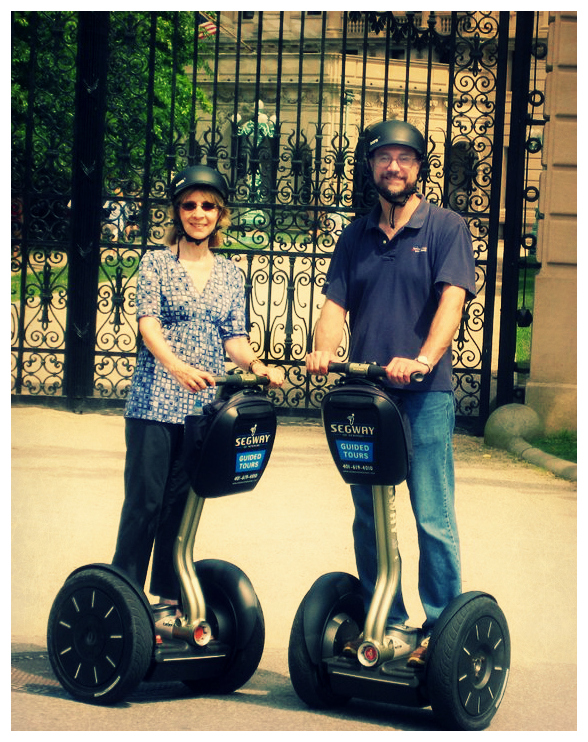
The couple who segway together, stay together.

The couple who segway together, stay together.

It’s my anniversary today (26 years), and because I didn’t get him a card (I’ve been sick and/or traveling a lot), I thought I’d take a page out of Letterman’s entertainment book and list the reasons why I am happy with the choice I made.

10. At our wedding I got to hire a string quartet to play for me us.

9. He truly likes to see romantic movies with me.

8. He can fix pretty near anything I break.

7. He rubs my feet when I ask him.

6. When I call the house phone from bed on weekends, he answers with a smile and says, “Room service.” (And yes, I can hear his smile – that’s how well I know him.)

5. He thinks I’m pretty and tells me often.

4. He’s THE best hugger in the universe.

3. He’s the most honest and trustworthy person I know.

2. He’s a kind and loving father. Which brings me to the number one
reason I’m glad I married the man I did:

1. Our boy. The best of both of us.

The two men in my life I am most grateful for.

The two men in my life I am most grateful for.

Here’s hoping for at least 26 more. I love you, Bob.

An imperfect man

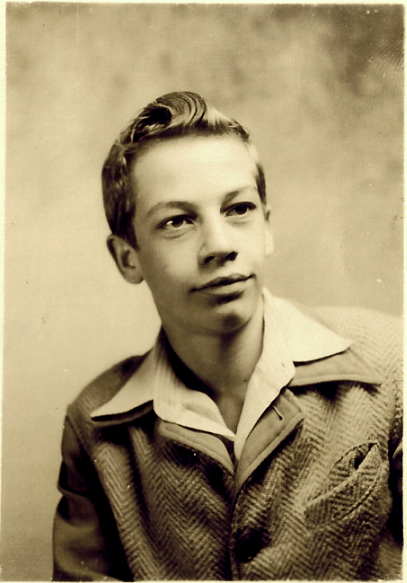
My Dad as a teenager. Even then, a sharp-dressed man. My Dad as a teenager. Even then, a sharp-dressed man.

My father is a nutball.  He cannot pass a tea shop without buying bags of loose tea.  Even though he has enough already squirreled away at home to last him into the NEXT millennium.  He buys clothes for the same reason the Kardashians do — because he loves a snappy outfit.  Unlike the Kardashians, the other part of the equation for him, means getting that new shirt or pants or pair of shoes at the lowest price possible.  There is no tickled pink like my father’s when he’s wearing something that he likes and knows it cost him less than the price of a movie ticket.

I understood from an early age that my father was different from other fathers.  It was much later that I chose the word eccentric to describe him because it seemed a more benign way of summing up a man I have struggled to understand.

He didn’t play ball or push us on swings or take walks with us.  He didn’t read us bedtime stories or tell us silly jokes.  When he wasn’t working, he was catching up on his sleep.  He could be at various times controlling, intolerant, and self-involved.  He often grew belligerent when he drank too much, which he often did.  His alcoholism ran like a ravenous wolf through our lives until the evening when members of the local volunteer fire department wrestled him into a straitjacket and drove him to the St. Lawrence State Hospital.  I was nineteen at the time.

There are no Father’s Day cards for that.

He was a complicated man.  He pinched pennies and bought food and shoes and blue jeans in bulk to feed and clothe seven children who grew faster than his wages.  He locked up the extras and doled them out as needed.  He became proficient at hording.  (So much so that he cannot break the habit decades later even though he lives alone.)

For a while he had friends.  Guys he grew up with and worked with and stopped at the hotel with to have drinks.  But, he was also kind of a loner who stayed up late reading on nights when he wasn’t working.  He believed in education.  And penny-pinching as he was, he surprised us once by bringing home a complete set of music appreciation records that taught us about Brahms and Mozart, Gilbert and Sullivan, folk music, gospel, and jazz.

He insisted on listening to classical music on Sunday, and going to church, and sitting down to big Sunday dinners.  He was so fond of Christmas that he let us eat candy all that day.  When his father died he cried openly.  When my baby sister Susie died at two days old he cried openly.

Once, in a moment of light heartedness, I plunked myself on my father’s lap and I hugged him.  He looked at me and said, What do you want? As though I had an ulterior motive.  I jumped up, stung.  But even as my teenage self bristled at his remark, I knew — I’d seen the look in his eyes and understood it — the hug had pleased him.  He just didn’t know how to accept it.

And therein lay the crux of my struggle:  Angry as I could be at my father for his meanness, I somehow sensed that he loved his children, even when he couldn’t articulate that love.  I sensed that the person he was most disappointed with was himself.

For a few years I wore braces.  On those trips home from the orthodontist’s (more than an hour’s ride away), in the lull of the drive and the comfort of a few drinks in him, he shared his thoughts with me on life and the world around us.  For a brief time he talked to me, not as a kid, but someone he could trust.  He told me what his dreams had been, what he believed in, what he wished he still could be.

My father is a sober man now.  He has been for more than 30 years.  But conquering his alcoholism didn’t vanquish every demon that possessed him.  A few remain.  He still wants things the way he wants them, and he can still be maddeningly self-absorbed.  But last year, when my son graduated college, my father was so excited that he drove from his home in rural northern New York to Amherst, Massachusetts to attend the graduation, without a cell phone or a GPS, both of which he refuses to own.  He left somewhere around 4:00am, to give himself time in case he got lost (he did), and made it to the college with just minutes to spare.

He is still a complicated man.

There are so many kinds of fathers, and Father’s Day cards are not made for all of them.  Sometimes we just have to make one of our own.


Lost

photo (3) sig

My father threw me in a river once and said, this is how you learn to swim.  I don’t remember if I was scared.  Only gliding through water so clear I could see everything the world might be made of.

The weightlessness thrilled me.  And the cold that warmed me the longer I wore it.  I glued my legs together with the wish for a fish tail and propelled my mermaid self through uncharted waters and forgot all the things I thought I knew.

Metamorphosis

wilderness 1 pm

It was a myth, of course. But still. When the end came he imagined going out like an elephant, lumbering off into the wild, away from others. Away from family and friends (well-meaning as they were). Dying should be a solitary thing.

Be careful what you wish for, someone pointed out. He might have listened, but he was young.

The change began slow enough, initially. By the time he realized, it was too late. He cursed about the unfairness of it. He drank too much, and smoked excessively. Eventually, he saw that struggle was futile, and he accepted the inevitability.

After that, his spine stiffened and lost flexibility. His neck took on girth. Was his head bigger? It was harder to move it. Even nodding felt awkward and uncomfortable. Surely, his ears had grown — his hearing was so much more acute. It was spring, and a million birds were whistling . . . warbling . . . chirping. Each call clear and distinct from the other. He could hear the hum of bees that swarmed around the lilacs in his neighbor’s yard.

The noise of it made his head hurt.

His skin became grayer and felt thicker. He noticed that he was more sensitive to sunlight. He wanted nothing so much as to wallow in a pool, but there had been no rain for weeks. The sky remained cloudless, the sun unrelenting in its persistence. So, he rolled up his pant legs (this movement, like so many other things, was becoming increasingly difficult to perform). He took his time at the task. Then he dragged a hose into his back yard and filled his unplanted garden with water. He let the cold water from the hose wash over his head and his back while the mud from his garden rose up his ankles. It was a moment sweet with joy.

Take it where it comes, he thought. He knew, above all, that much was true.

When the transformation was nearly complete, he found that his clothes didn’t fit him anymore. His arms and legs were ponderous, hulking appendages that he could no longer articulate without effort. It might have been more bearable if his mind had also been altered, but that was not the case. His was a young man’s brain in a body that didn’t fit.

All he lacked was a trunk.

There was nothing to do but wait for the last, most useful part of his new self. The thing that would make all the other parts work the way they should. At last, his patience was rewarded. He had it all. He raised his trunk and let forth a mighty trumpet blast. As he stood at the precipice of waiting, he saw the place where he would go: A fern-floored forest where sunlight split the top of the trees and shone rose-colored on one massive tree. His tabernacle.

His solitary thing.

n.b. I was intrigued by this week’s DP challenge on Metamorphosis, the purpose of which was to write about a transformation of human to animal form. It made me remember a conversation I had many years ago with someone I loved. It had to do with elephants.

Verboten (in a manner of speaking)

It started because we all wanted a seat on the couch.

As is often the case in large families, there weren’t always enough places to sit.  The living room in our house had enough space for two large arm chairs and a couch.  My parents got the arm chairs, we kids had to fight for a piece of the sofa.  We could squeeze four of us without touching — a key element to relatively peaceful TV watching.  That left three kids on the floor.

Like all good families we had rules.  Number one rule on TV night:  if you were lucky enough to get a seat on the sofa (first come, first served), you were good.  But, if you got up for anything you HAD to say, “I get this seat when I get back.”  And say it loud enough to be clearly heard.  Otherwise, you lost that prime spot to the quickest kid on the floor.

We were a scrappy, contentious lot, but we were honorable.  As long as you played by the rule, your place would be waiting after you went to the bathroom or got your drink.  If you forgot to say the phrase, though, all bets were off.

Surprisingly, there were plenty of times that one of us would forget, and we would try to wheedle our way back into that still-warm spot, hoping that everyone else had missed the fact that we hadn’t said anything.  But there was always someone who knew you hadn’t and an argument would ensue.

One night my father put his foot down.  He forbade us to say “I get this seat when I get back”.  Never again, he said.  My father always meant what he said.

This was a problem.  We would no longer have a modicum of control over where we sat and for how long.  Without our rule there would be constant seat stealing and chaos.  What were we to do?

. . . . and yet a true creator is necessity, which is the mother of our invention Plato wrote in The Republic.  Plato was a pretty smart guy.

In our case, necessity led to the invention of mongwa.  My brother Jaime its creator.

We slipped that word into the matrix of our family life so smoothly my father didn’t notice at first.  One word is so much shorter, ergo, less noticeable than eight.  By the time he did notice, I think he actually thought it was pretty clever, so the word stayed.  It moved beyond the living room and into the kitchen, the dining room, the porch steps — any situation where there were more people than places to sit.

Decades have rolled by since mongwa entered our lexicon.  Now it’s as much a part of our family as our DNA.  We all still use it, though its necessity is seldom the point.  It’s a secret handshake, a wink, a nod.  An acknowledgement.  We were kids once in a fractious family and we lived to tell the tale.  Most of us.  Two brothers are no longer here.  Still, they were part of it and saying mongwa brings it all back and we are kids again.  We remember.

But every once in awhile it still means the same thing.  I get this seat when I get back.

It’s the rule.

Six of us standing (no need to say mongwa). One sister missing - she's probably taking the photo. This was taken about the time mongwa was invented.  Only six of us posing. Our word creator is the last one on the right with blonde wavy hair.  One sister is missing – she’s probably taking the photo.


Quiet night, ghostly light

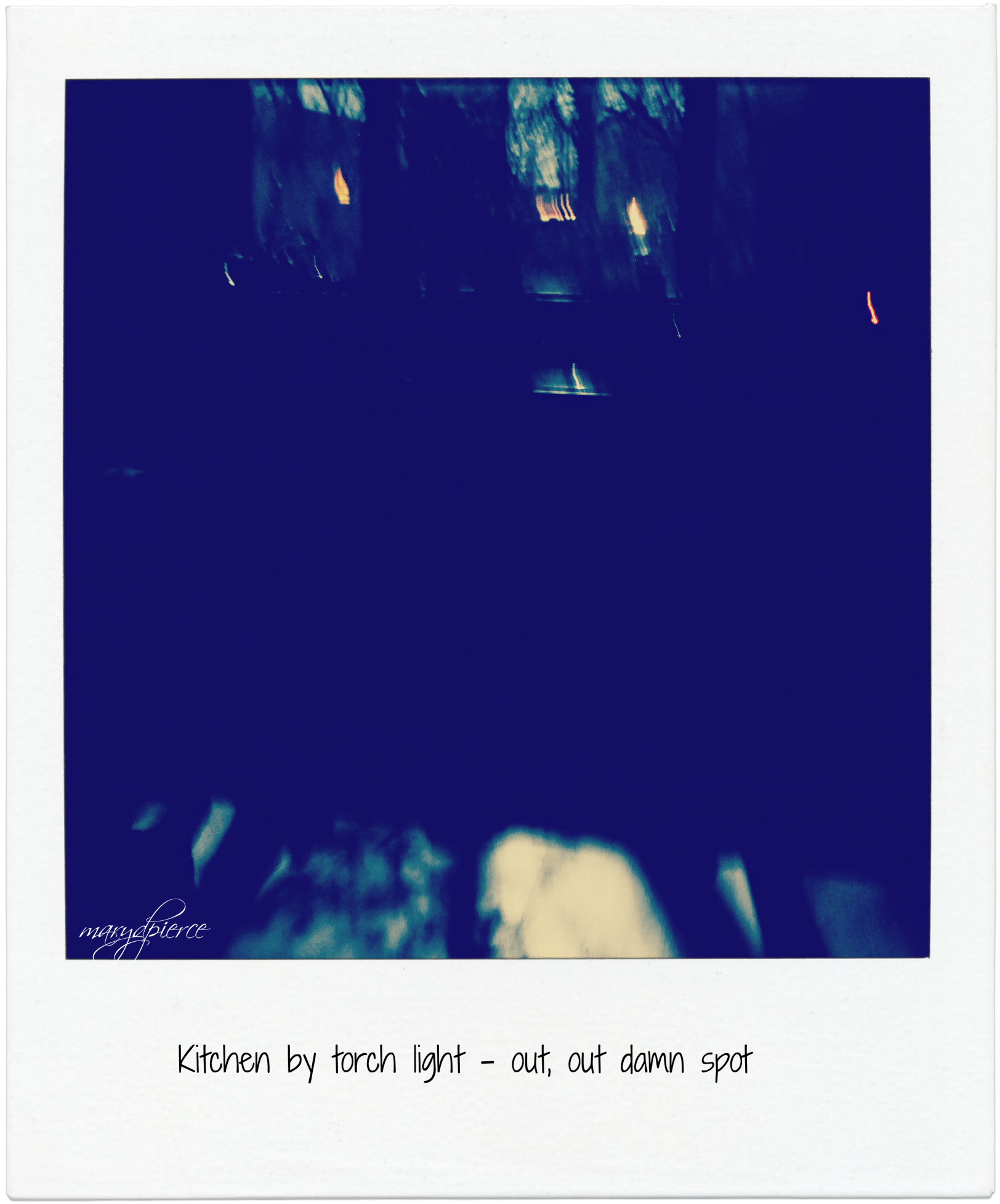
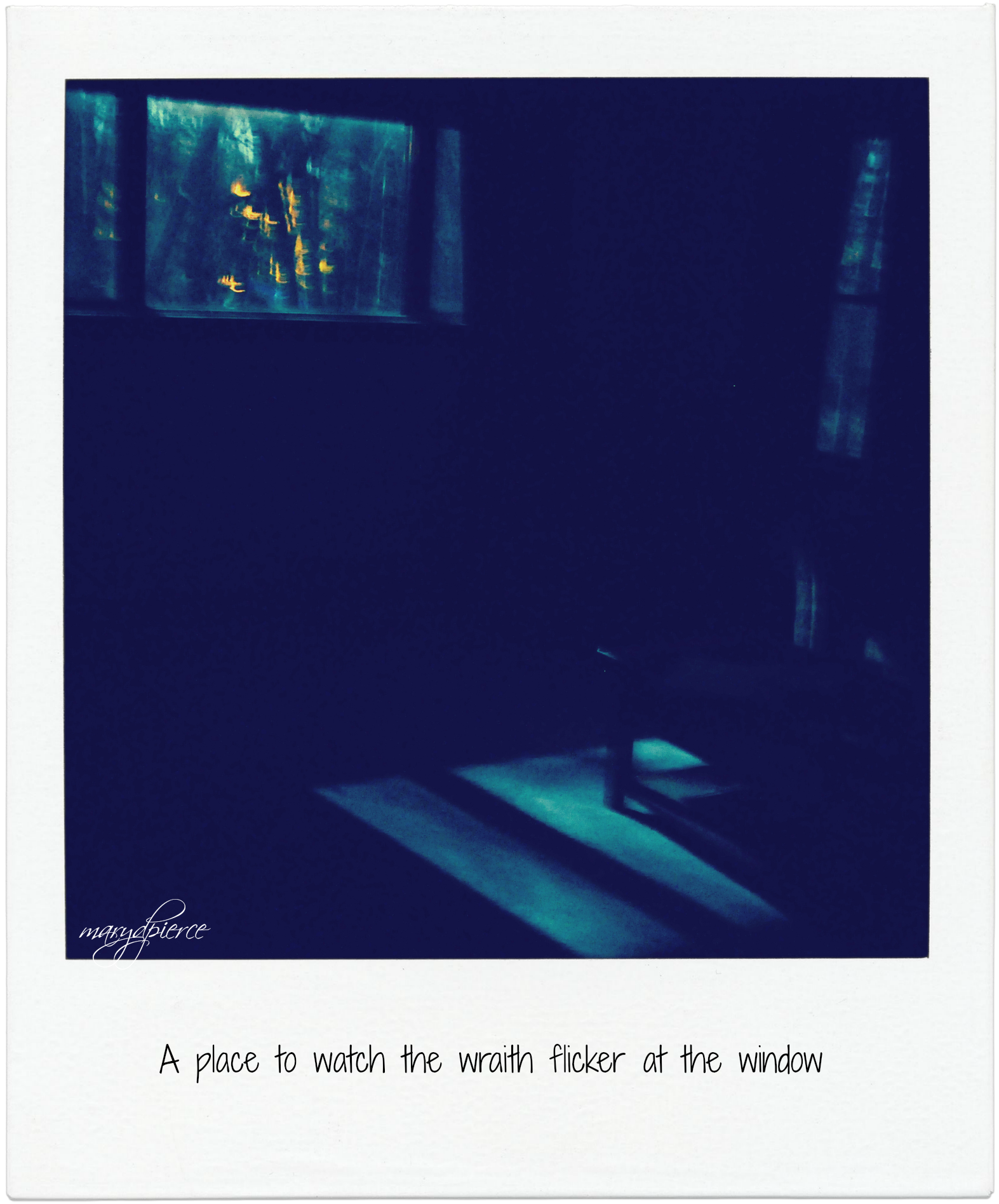
This is what happens on a clear night when I cannot sleep, and the moon is full.  I prowl through my house in the dark with a camera.  No tripod.  Just my own unsteady hand.

It’s playtime.

full moon 5 pm txt

I prop myself against a wall and shoot, trying to capture the lamp-lit windows of my neighbors’ houses.  The shutter stays open for an eternity.  My camera weighs a ton.  I am not steady enough.  The lights look like flames.  The reflection from the window throws itself across the room to where I am standing; the moon is a big white puddle on my floor.

full moon 1 pm txt

The den has a pair of windows and an atrium door – a little more shimmering light.  A patch of green appears beyond the balcony.  Proof of spring.  A tiny voice that whispers, I’m here.

full moon 2 pm txt

In this room a window placed too high; a mistake I regret making now, but too late to change.  A cabala of lights beyond the trees seems to agree.  What WERE you thinking they ask.

full moon 4 pm txt

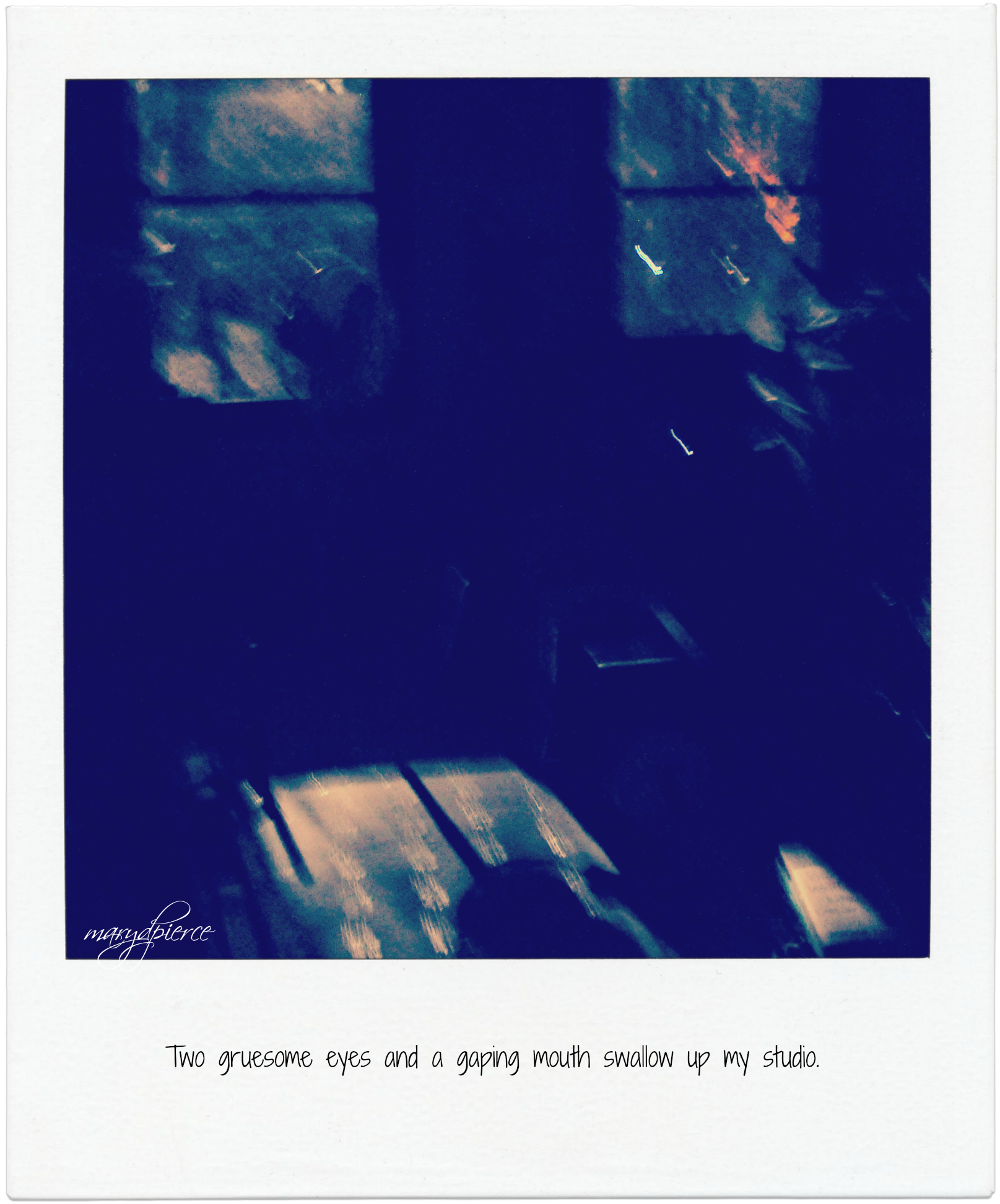
My studio is a room with four windows and no curtains.  I used to paint here.  Now I write.  The room has been overrun by books.  And words.

I love this skulking around the house in the dark, while my husband sleeps, completely unaware that I am up.  I feel like a child guarding a secret that no one knows but me.

You must promise not to tell.